
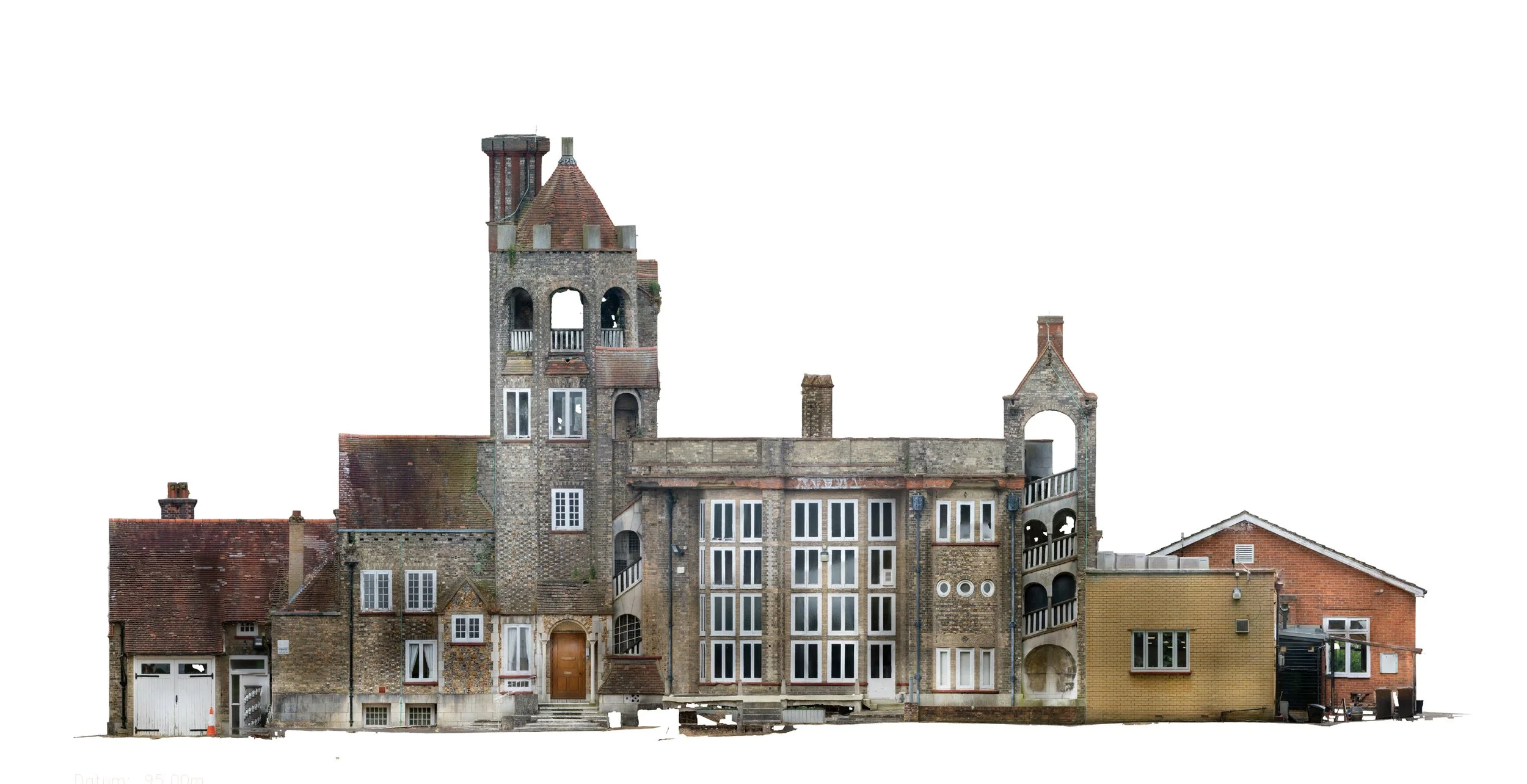
The Cloisters, Letchworth Garden City
Making the building safe
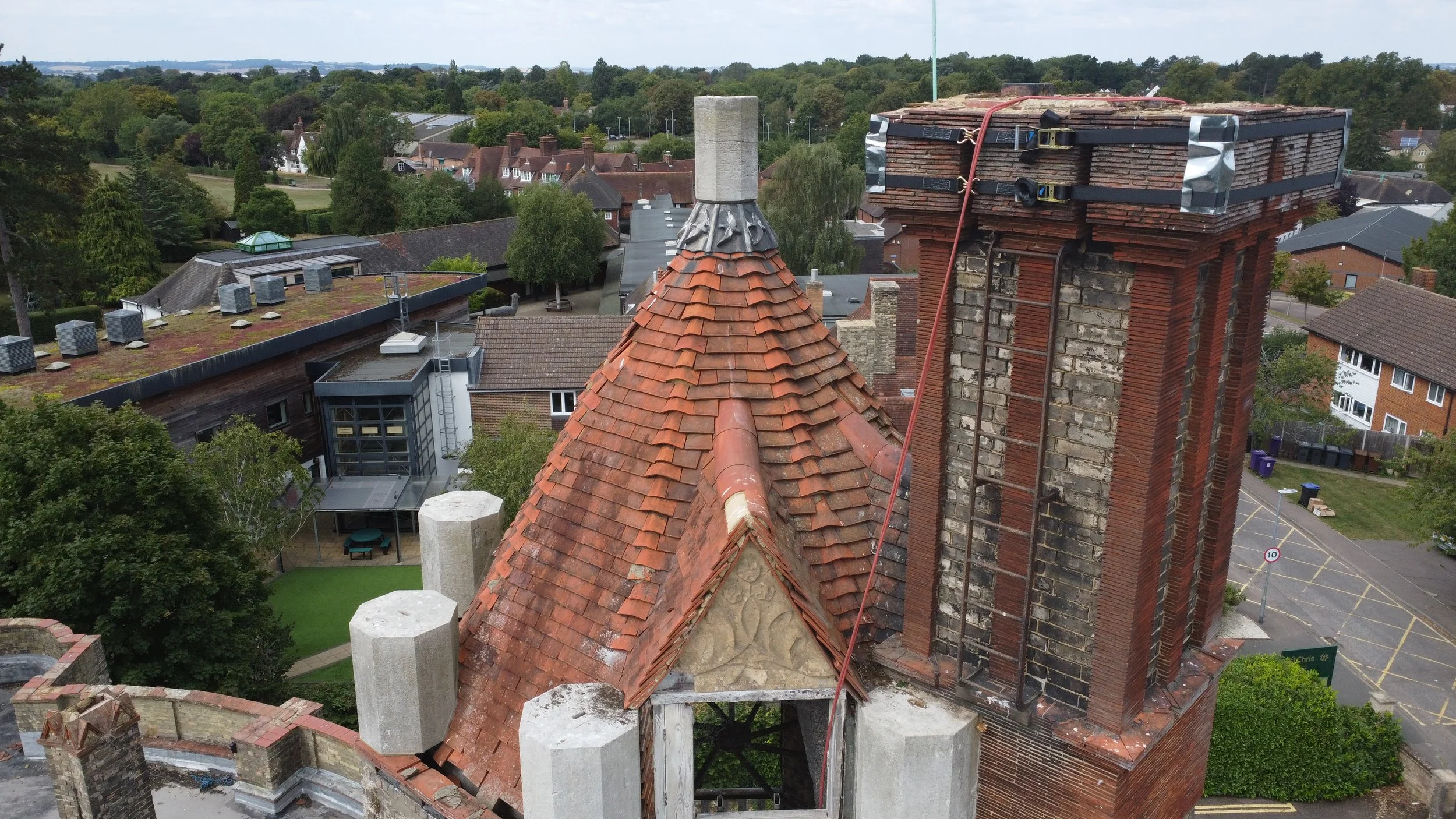
Photography ©JP Conservation 2025.
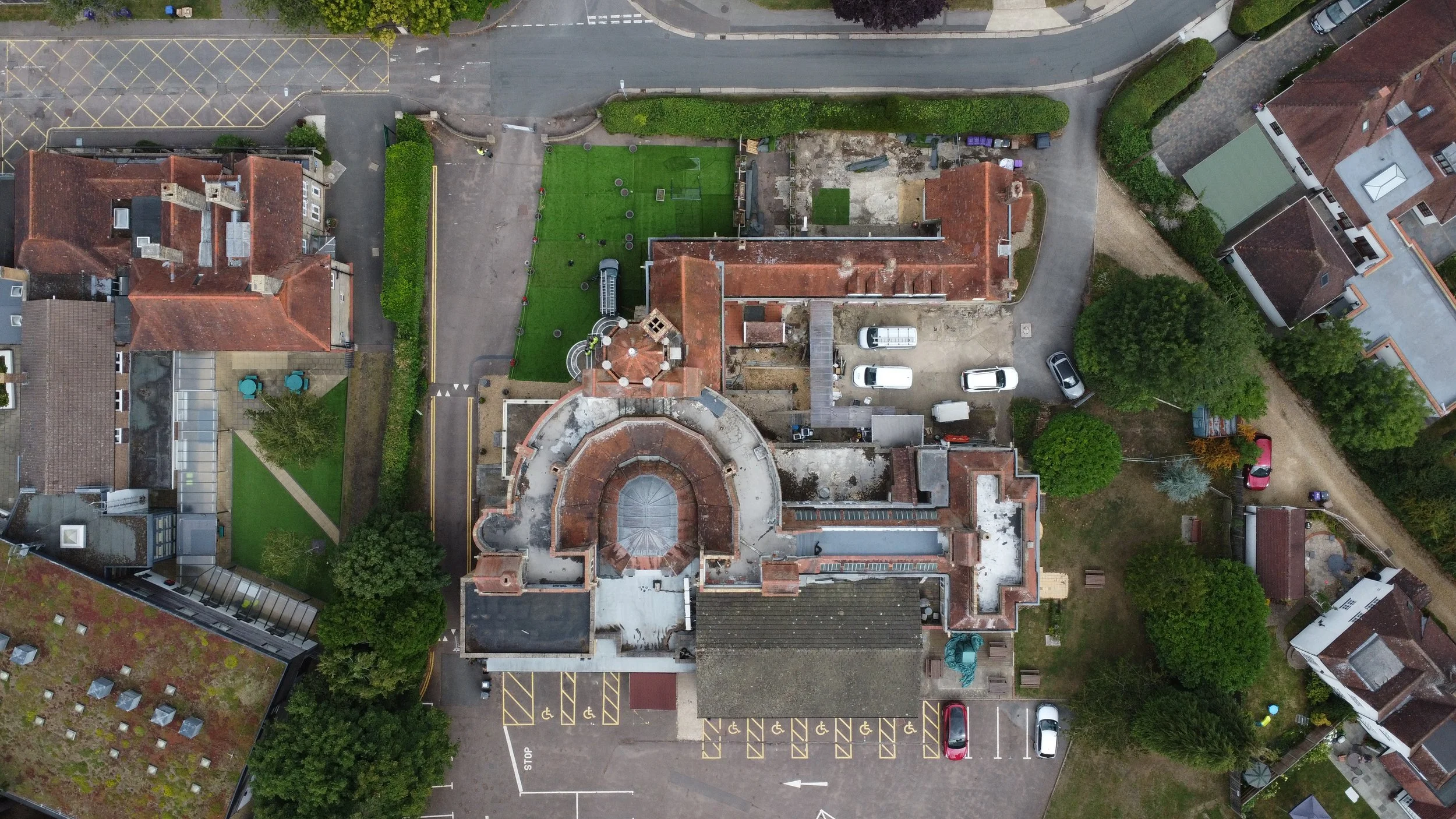
We are delighted that after several years of planning the chimney at the Cloisters has been secured.
Specialist rope-access conservators JP Conservation were appointed to carry out temporary stabilisation works to the upper section of the chimney. These measures have secured the structure in the short to medium term, while plans and funding for permanent repairs are developed.
The works were completed in summer 2025, allowing protective barriers to be removed and access to the site to be restored. This phase marks an important step in a longer journey of careful repair, understanding and stewardship, ensuring that The Cloisters can continue to be valued and enjoyed well into the future
Our involvement
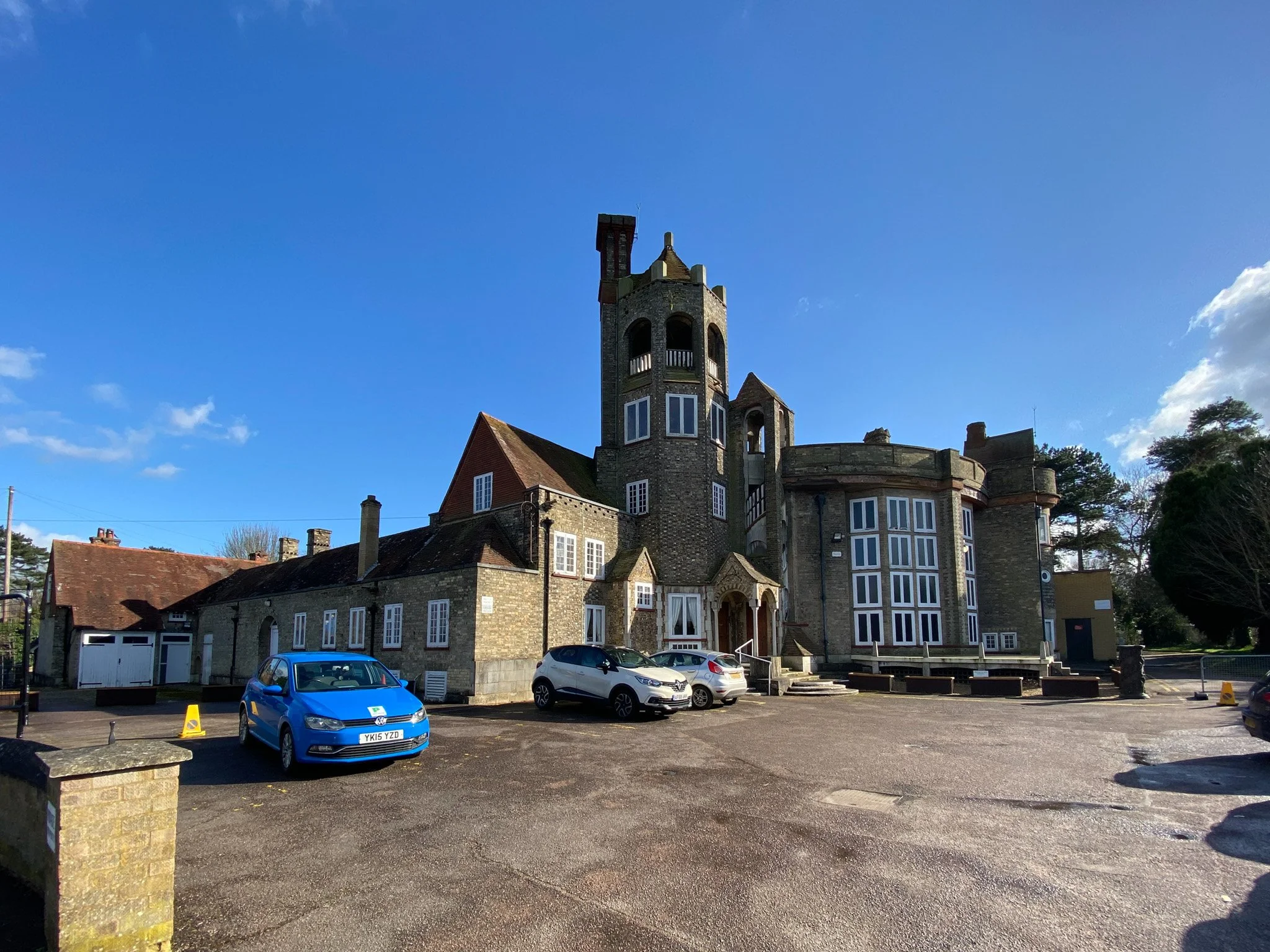
Our work at The Cloisters, Letchworth Garden City began with a careful exploration of how this remarkable Grade II* listed building might be sustained for future generations. Working alongside heritage business planners Fourth Street, we carried out a viability and options appraisal to understand how the building could continue to serve its established role while finding new ways to support its long-term care.
The Cloisters is currently home to the North Hertfordshire Masonic Lodge, a use that has played an important part in the building’s history for more than seventy years. Central to our approach was the question of how the building could be sensitively adapted to maintain this use, while also opening up opportunities for additional income that would help secure its future.
Understanding the building
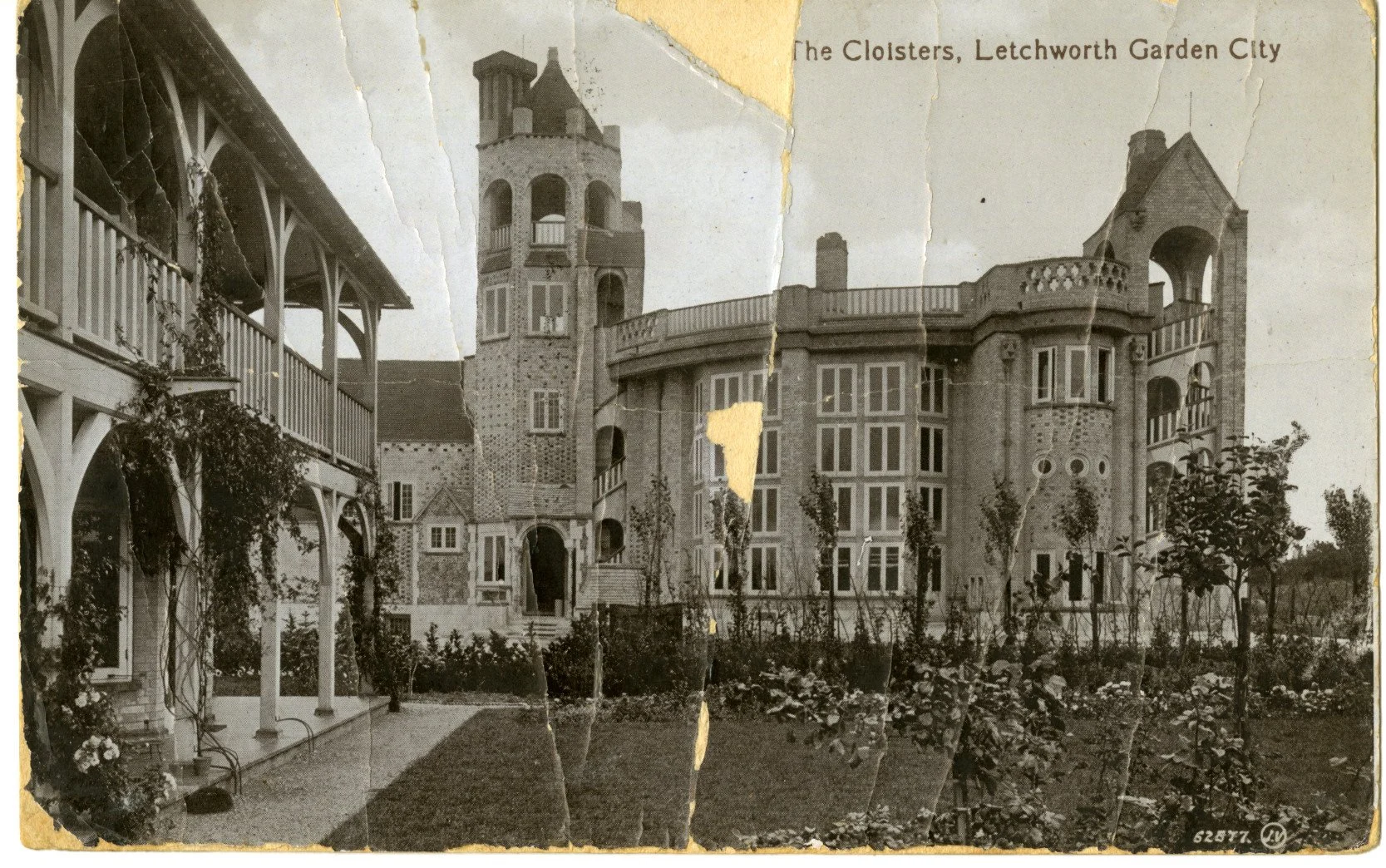
As part of this early work, we prepared a detailed Heritage Statement and reviewed a range of potential options for change. This process was rooted in understanding the building as it was originally conceived. Archival drawings, photographs and written records revealed how William Harrison Cowlishaw’s design had once functioned as an open, communal and outward-looking place, and how later alterations had gradually concealed some of these qualities.
Historic photographs were particularly valuable in illustrating the evolution of the site, showing features such as the original swimming pool, open balustrades and the more fluid relationship between inside and outside. This evidence helped to inform a conservation-led approach, where change is guided by the building’s story rather than imposed upon it.
Exploring a sustainable future
The viability study looked beyond the building itself to consider local facilities and patterns of use. It identified that The Cloisters is especially well suited to music and performance, reflecting its long tradition of concerts and cultural gatherings in the early years of Letchworth Garden City. A carefully considered proposal emerged for the building to host concerts and performances during summer weekends, when masonic activity is less frequent.
The scheme demonstrated how these different uses could coexist, with careful attention to access, privacy and security. The outcome was a costed viability options appraisal, providing a practical and realistic framework for improving the building’s resilience and supporting its ongoing care.
The Lawrence Cloisters Trust is currently exploring ways to raise funds to take this work forward.
Phase II: Caring for the fabric
Photography ©JP Conservation 2025.
Alongside the viability work, a detailed condition survey identified areas of urgent concern. Most notably, the chimney to the tower was found to be in poor condition, with instability to the corbelled masonry posing a risk to the building and its surroundings.
With support from Historic England, funding was secured to develop a scheme for repairing the chimney and addressing a number of other priority issues. These included works to the tower roof, structural repairs, masonry columns, general fabric repairs, leaking roof finishes and problems caused by nesting pigeons.
During investigative opening-up works, the building revealed more of its experimental character. Both the floor and roof structures were found to be constructed using clinker concrete, rather than traditional timber construction. This discovery highlighted the unique and innovative nature of the building, and the need for a thoughtful and cautious approach to repair.
In discussion with Historic England, it was agreed that these findings should inform a future Conservation Management Plan, and that long-term solutions would need to be tested through carefully monitored trials over time. Given the growing scope and complexity of the works, and the costs associated with extensive scaffolding, it was decided to focus resources on making the most urgent element safe.