
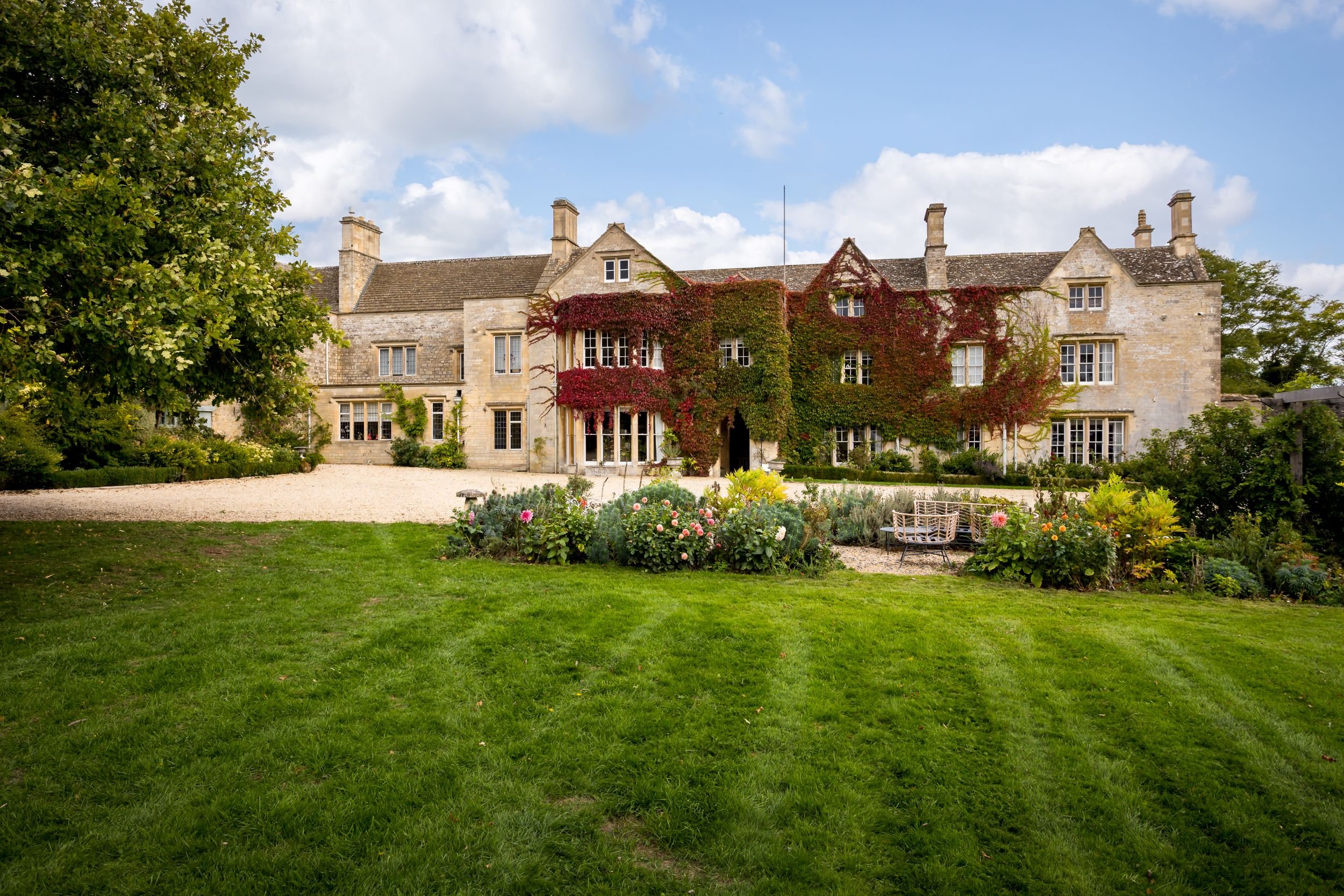
Private House, Oxfordshire
Status: Grade II Listed
Setting: Conservation Area
Services: Heritage advice, planning and listed building consent, architectural design, contract administration
Reinstating a family home
When our client acquired the property in 2018, the house had not been used as a family home for many years. As a result, it had been subject to unauthorised and unsympathetic alterations, undertaken during periods of intermittent occupation. These interventions had eroded the clarity of the historic plan form and diminished the architectural coherence of the house.
Our client’s ambition was to unpick these changes, and maximise the long-term value of the house by adapting it carefully for contemporary family life. This was approached through a carefully phased strategy, allowing the house to evolve gradually while responding to heritage, planning, ecological, and archaeological constraints.
A phased approach to change
The project was delivered in six distinct phases, each designed to minimise risk, manage heritage impact, and allow the client to occupy and enjoy the house throughout the works.
Phase one: swimming pool and garden structures
Photography by Oliver Grahame © 2025
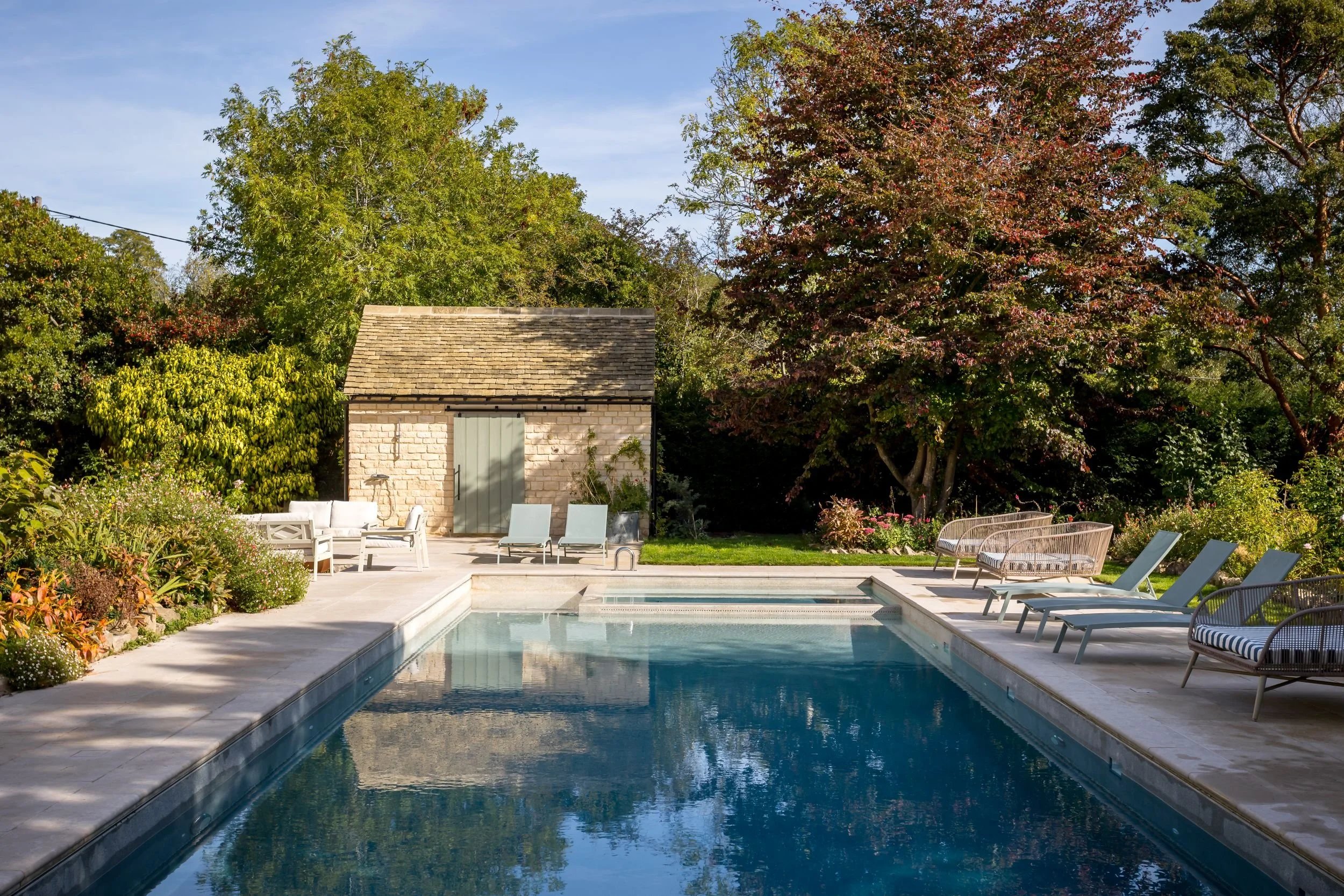
The first phase involved the introduction of a new outdoor swimming pool within the garden of the Grade II listed building. While listed building consent was not required, the works fell within the setting of a listed building, making heritage considerations central to the design.
There was historic precedent for a pool within the grounds, providing an important contextual justification. However, the style, location, and architectural language of the new pool required careful calibration to avoid visual harm.
Associated plant and a shower room were discreetly positioned on the site boundary and designed using sympathetic materials and proportions, drawing cues from the historic fabric without resorting to pastiche.
Phase two: breakfast room extension
Photography by Oliver Grahame © 2025
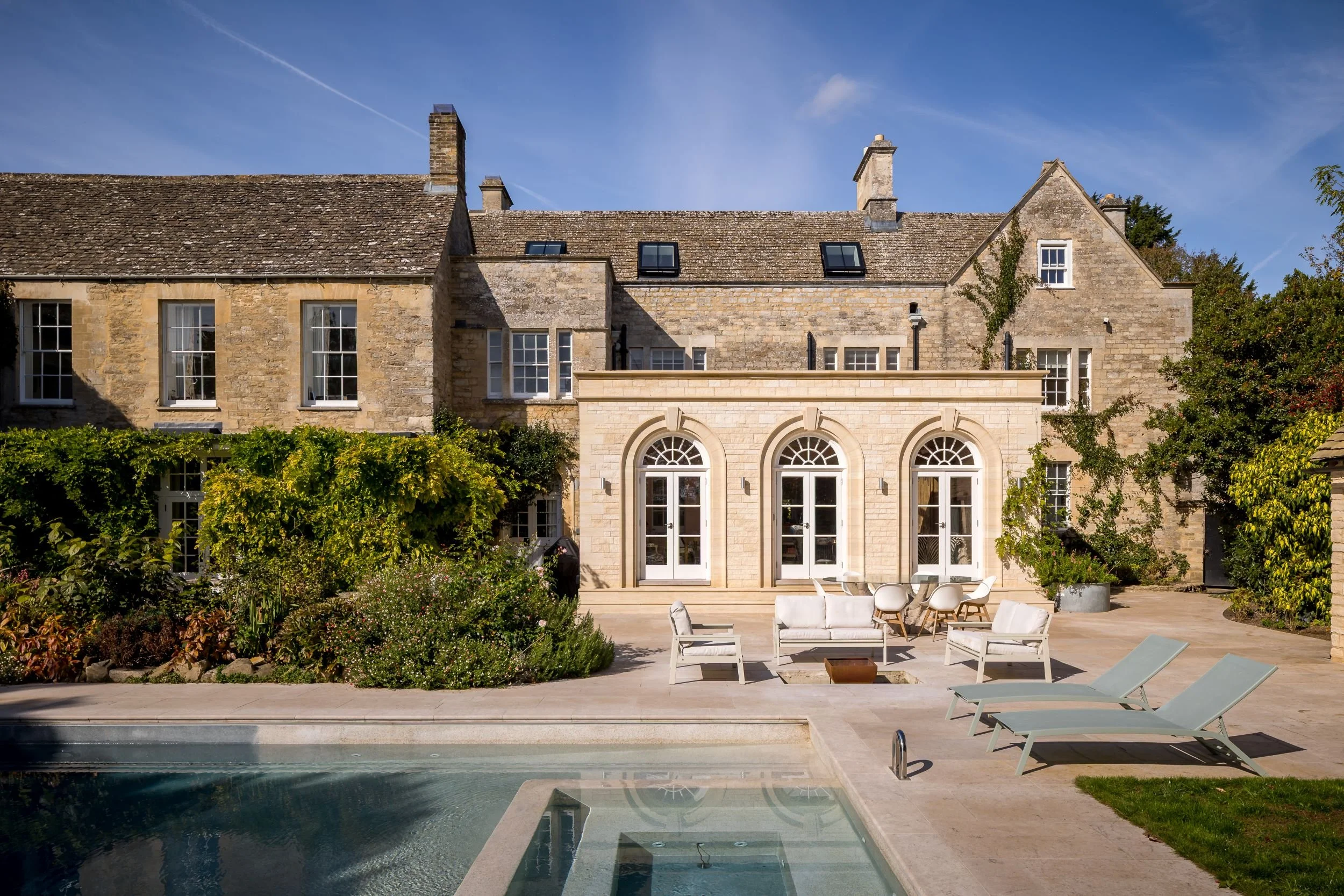
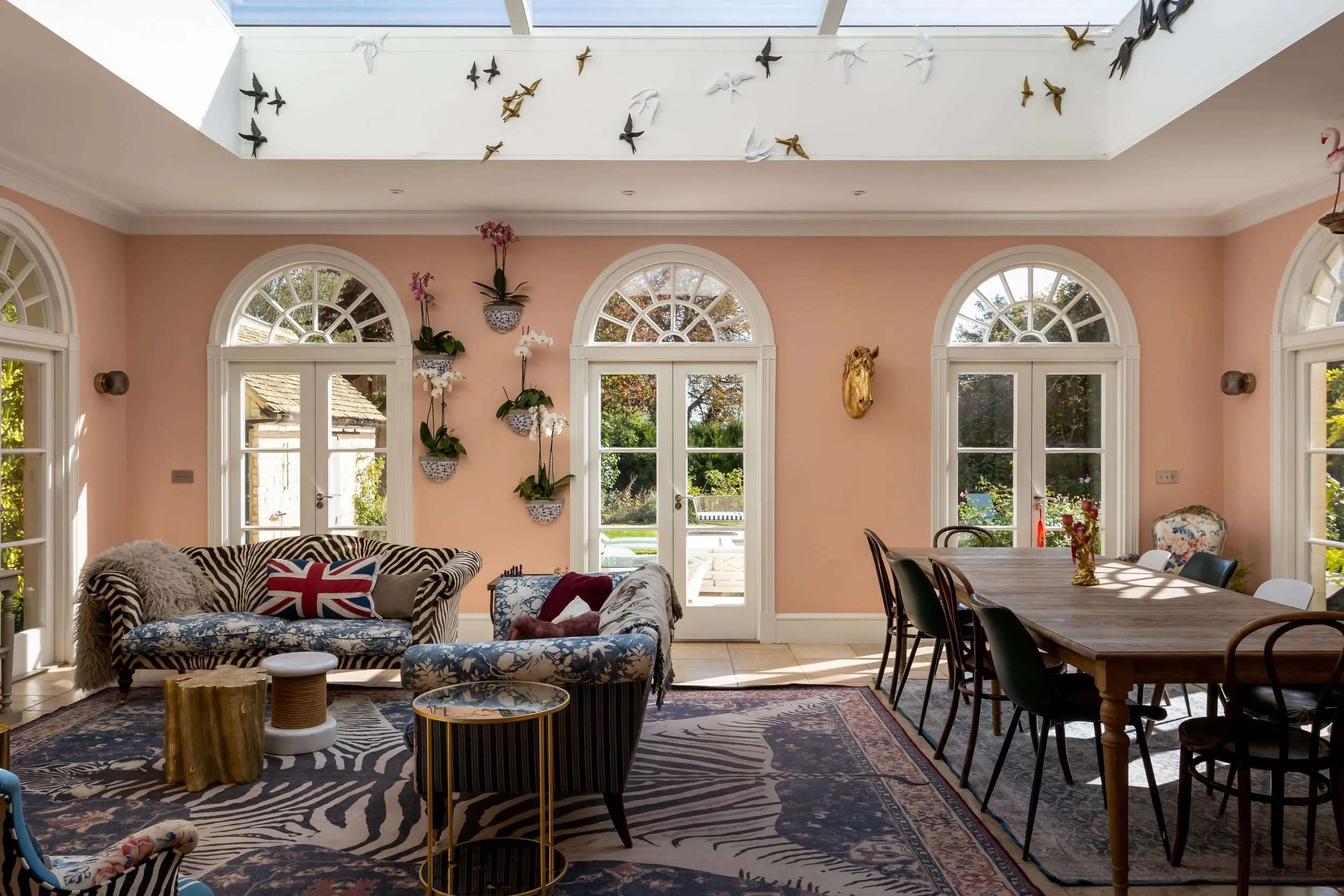
The second phase comprised the construction of a new breakfast room, extending the existing kitchen to better support family life. The extension was located to the north of the house, an area largely constructed in the early 20th century, thereby minimising impact on earlier historic fabric.
The architectural language of the extension draws on an existing doorway on the rear elevation, repeating its proportions to create a lightweight pavilion-like structure, characterised by generous glazing, strong garden connections, and direct access to the pool terrace.
Internally, architectural elements such as cornices and architraves were carefully replicated from the adjacent historic corridor to ensure continuity. The interior design of the kitchen and breakfast room was completed by Beyond Design.
A significant challenge during this phase was the site’s archaeological sensitivity, given its proximity to the church. A full archaeological watching brief and Written Scheme of Investigation were required, adding approximately six months to the programme before foundation works could proceed.
Phase three: bothy conversion to annex

Photography by Oliver Grahame © 2025
The third phase involved the conversion of the historic bothy into a self-contained annex. Although permission had previously been granted, the lapse of conditions meant the original consent could no longer be implemented.
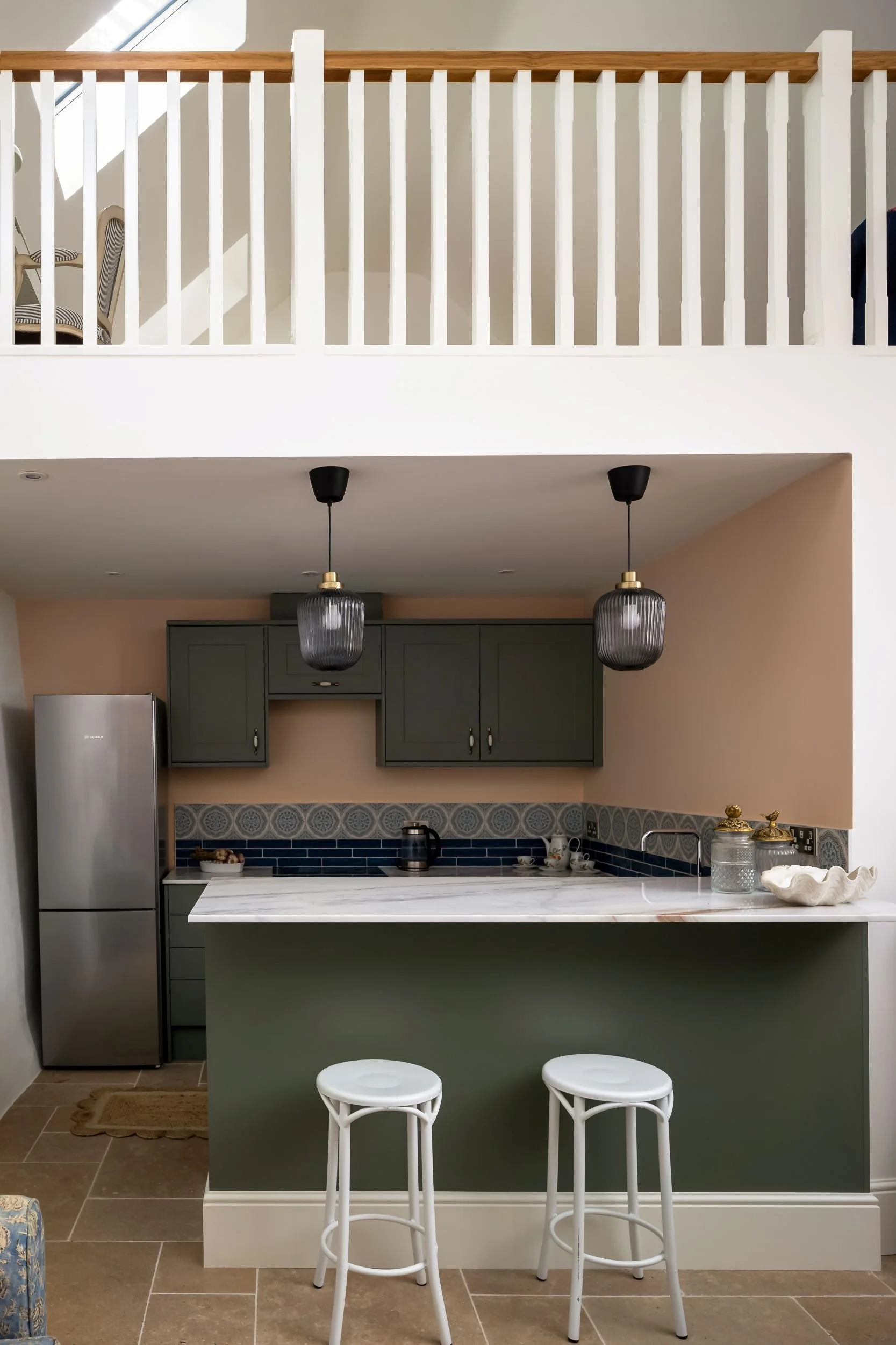
This provided an opportunity to reimagine the building to better suit the client’s needs. The scheme introduced two bedrooms and a combined sitting room/kitchen, achieved in part by lowering internal ground levels to improve spatial quality.
The design included a modest extension, discreet alterations to window openings on non-principal elevations, and the introduction of conservation rooflights to the rear. The building fabric was upgraded using breathable, hygroscopic insulation systems, allowing modern thermal performance to be achieved without compromising the building’s historic behaviour.
Interior design of the bothy was undertaken by Beyond Design Ltd.
Photography by Oliver Grahame © 2025
Phase four: garage conversion and bat mitigation
Photography by Oliver Grahame © 2025
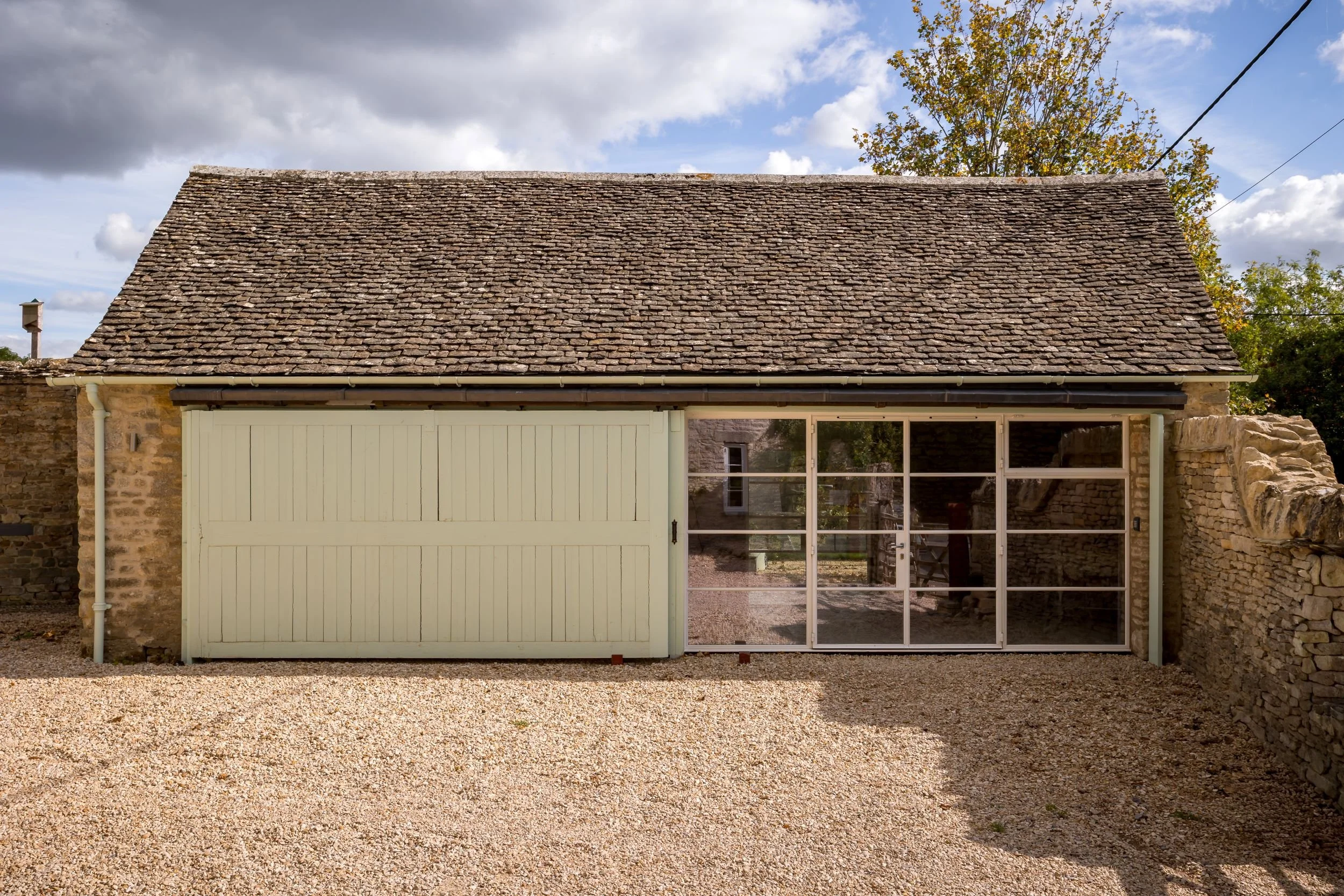
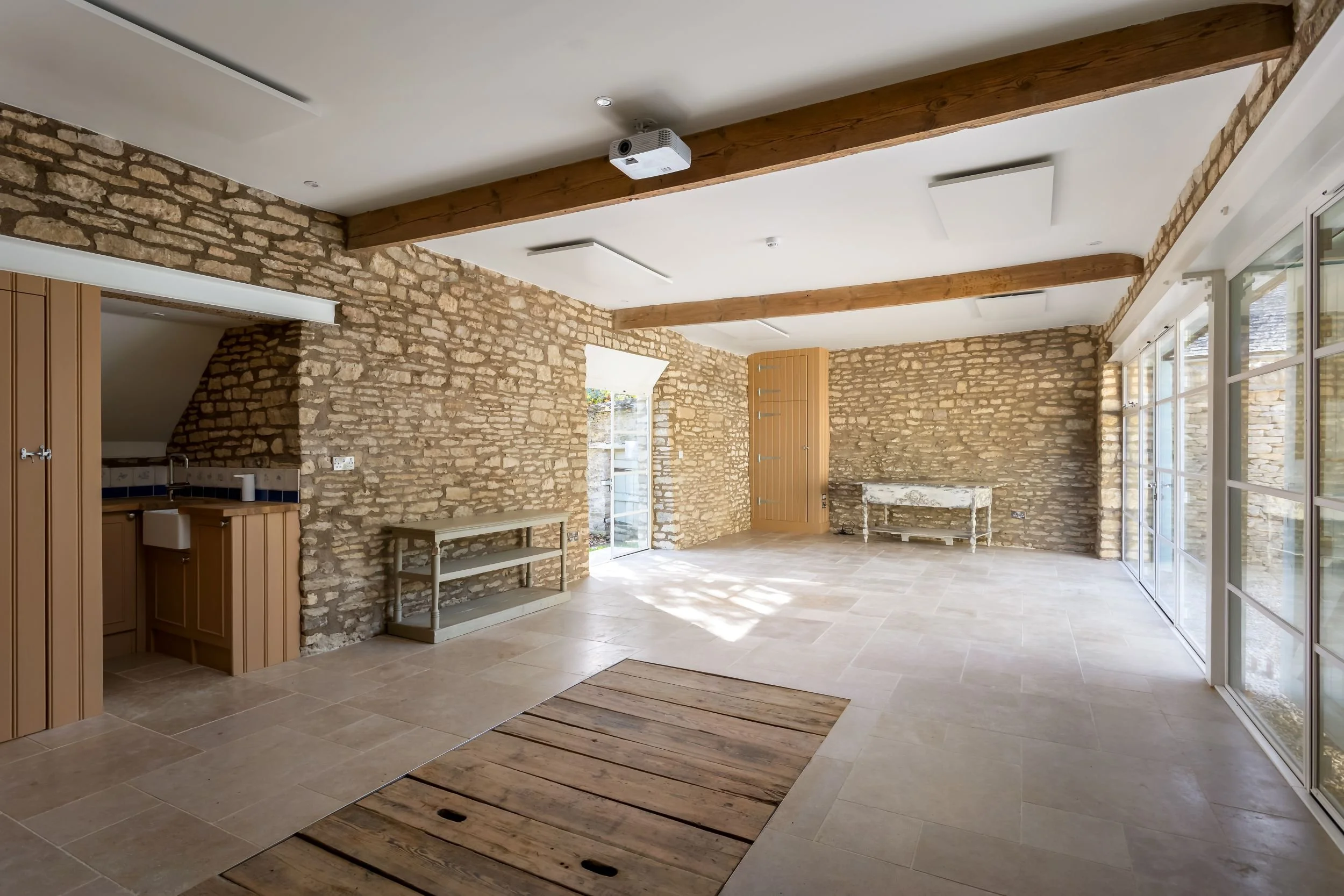
The fourth phase was a light-touch conversion of the garage into a games room. Existing garage doors were repaired and retained, with new modern doors discreetly installed behind them. Internally, the building was re-pointed and a new floor finish introduced, allowing the space to open directly onto the walled garden.
Hidden within this phase was an important ecological component: the creation of a new bat loft for horseshoe bats. The house contains several maternity roosts, and a carefully designed mitigation strategy was developed, involving the retention and rationalisation of roosts within the house and the relocation of bats to a new roost within the garage structure.
Interior design of the garage was undertaken by Beyond Design Ltd.
Photography by Oliver Grahame © 2025
Phase five: attic conversion (Historic Core)
Photography by Oliver Grahame © 2025
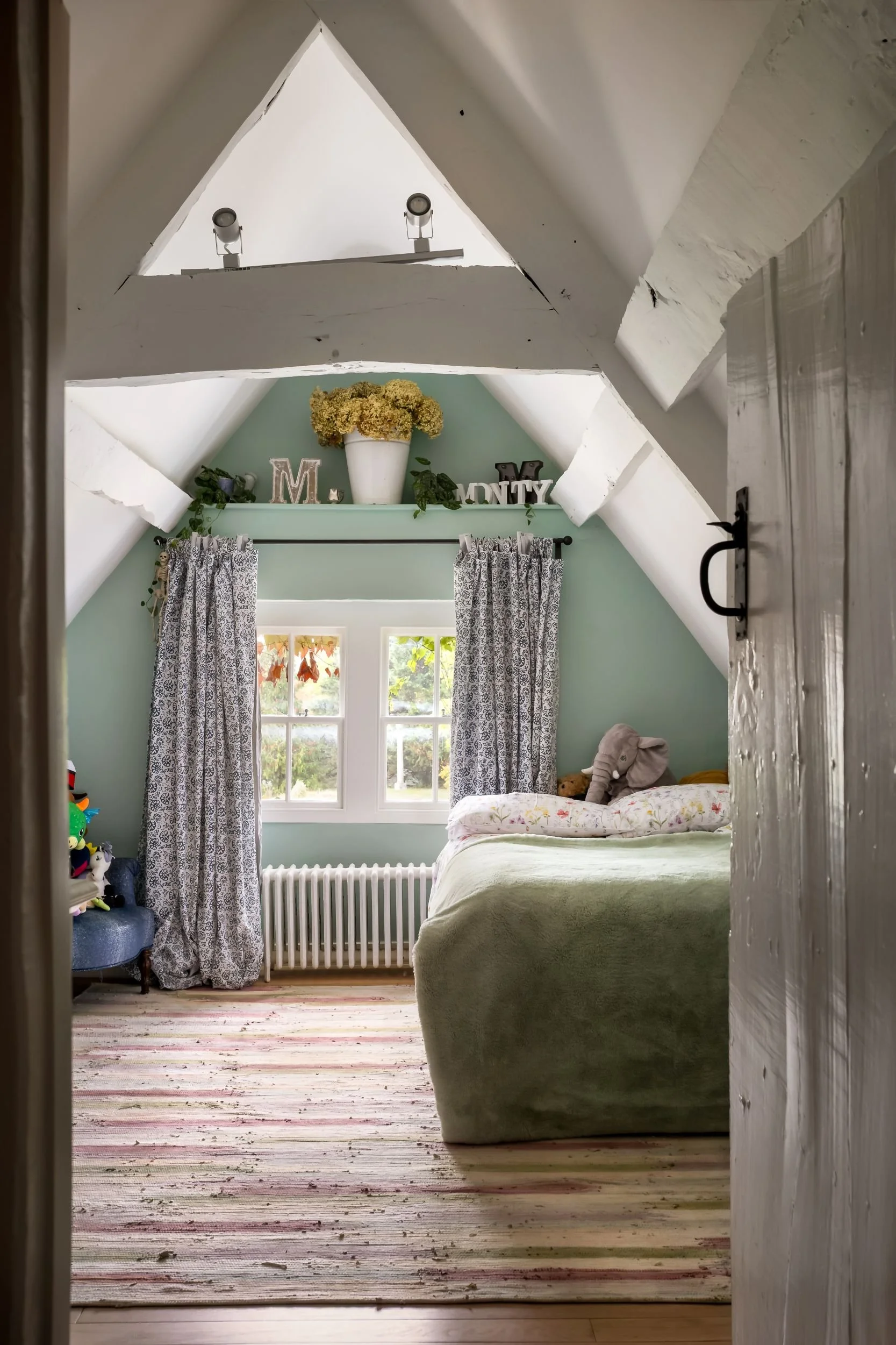
The fifth phase focused on the conversion of an existing attic within the older part of the house. Previous owners had removed the original staircase and blocked access, although the attic rooms themselves survived, albeit compromised by later services.
Reinstating the historic stair was not feasible due to modern alterations and heating systems. Instead, a new stair was carefully threaded through the building, minimising intervention in historic joists and structure.
Because the works effectively reinstated a historic use, Building Control accepted that the scheme did not need to comply fully with modern fire regulations. This allowed the retention of 17th-century boarded doors and avoided intrusive upgrades elsewhere in the house.
The timing of this phase was closely coordinated with the establishment of the new bat loft and required collaboration with the project ecologist.
Interior design by Beyond Design Ltd
Phase six: early 20th-century roof conversion
Photography by Oliver Grahame © 2025
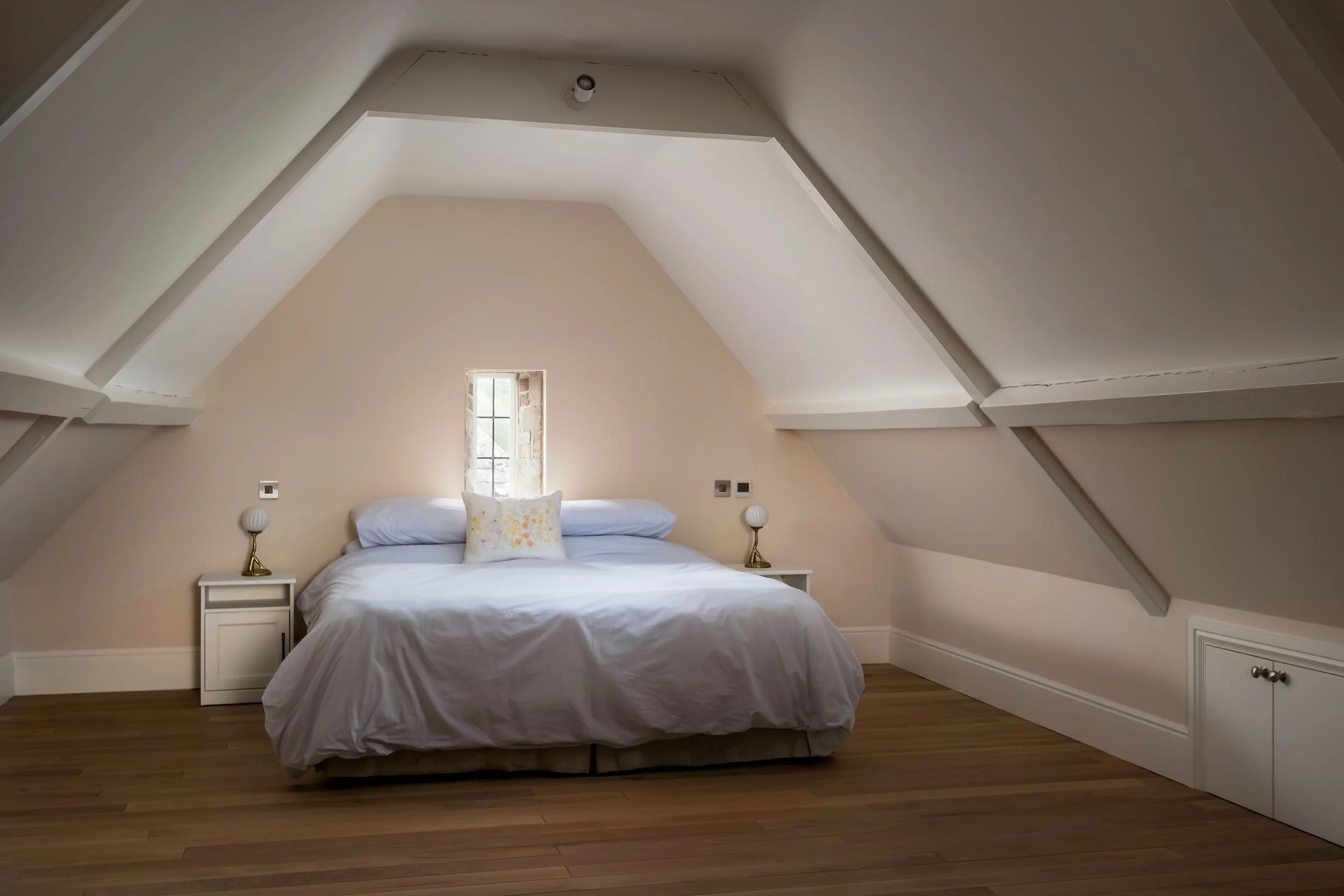
The final phase involved the conversion of the modern roof space over the early 20th-century part of the house. While generous in volume, the space was constrained by an existing chimney, the early 20th century roof trusses and extensive modern services.
The design was developed to minimise alterations to the chimney and roof structure, retaining and diverting services where possible to avoid unnecessary disruption to the heating system.
The scheme introduced a new double bedroom with en-suite and dressing room, along with an additional study. Carefully positioned rooflights on the south elevation provide natural light while respecting the character of the roofscape.
Interior design by Beyond Design.
A house reclaimed
Through this phased, conservation-led approach, the project has maximised the value of every underused space. More importantly, it has reinstated the house as a coherent, functional family home, enhancing its architectural clarity while respecting its historic fabric, setting, and ecology.
Project team:
Client - Private.
Contractor – Barr Construction
Interior designer – Beyond Design.
Architect - James Mackintosh Architects Ltd.
Structural Engineer – Frank W Haywood and Associates.
Ecology – Four acre ecology.
Photography by Oliver Grahame © 2025